Rotator Cuff Surgeon in Annapolis, Maryland
Shoulders fail in two characteristic ways. Some wear or tear where the rotator cuff tendons attach, until lifting, reaching, and sleeping on that side become the problem. Others come out of joint. This guide covers the first; shoulders that dislocate or slip have their own Bankart repair and shoulder instability guide.
Dr. Benjamin M. Petre is a board-certified orthopedic surgeon, fellowship-trained in sports medicine at The Steadman Clinic in Vail, Colorado, who performs arthroscopic rotator cuff repair at Luminis Health Orthopedics in Annapolis. He performs about 100 shoulder surgeries each year, has published peer-reviewed research on rotator cuff repair constructs and recovery, and sees athletes and active patients from across Anne Arundel County, including Severna Park.
Dr. Petre's work is focused exclusively on sports medicine and sports injury surgery. He does not perform joint replacement, but he has excellent partners in Luminis Health's joint replacement program and is glad to refer you to them.
Anatomy of the Shoulder
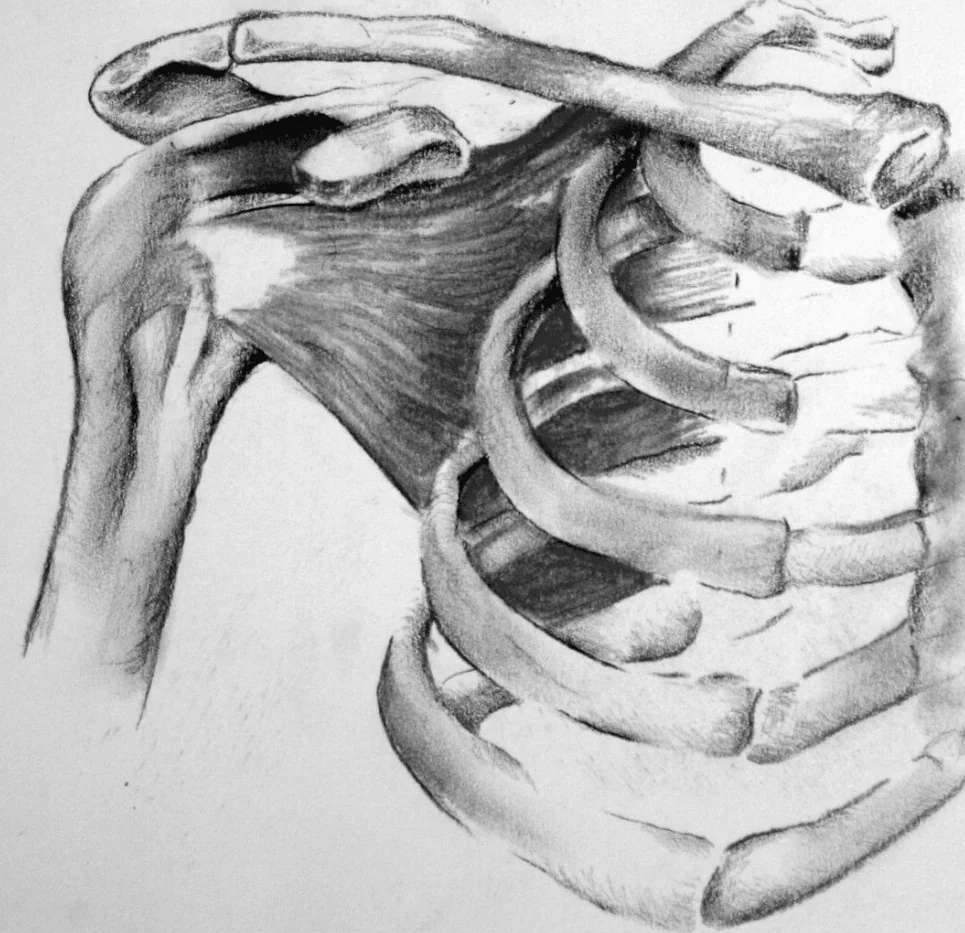
The shoulder trades stability for motion. The ball of the humerus sits against a socket — the glenoid — that is shallow by design, closer to a golf tee than a cup. What keeps it centered is soft tissue: the labrum, a fibrocartilage rim that deepens the socket; the capsule and its ligaments; and the rotator cuff, four muscles whose tendons wrap the ball and press it into the socket as you move.
The biceps tendon also runs through the joint and attaches at the top of the labrum, which is why biceps problems and labral problems often travel together. When the cuff tears, the shoulder loses both strength and the compression that keeps it centered. When the labrum and capsule tear, the shoulder loses its checkrein against dislocation.
Rotator Cuff Tears
Cuff tears come in two flavors. Acute tears happen in a moment — a fall onto an outstretched arm, a hard yank on a leash or a line. Degenerative tears build over years as the tendon thins where it attaches to bone, and are increasingly common with age.
Not every tear behaves the same. Partial-thickness tears leave the tendon attached and often respond to therapy. Full-thickness tears have pulled away from the bone; they do not reattach on their own, and larger tears can retract and become harder to repair with time. Tear size, tendon quality, how much the muscle has atrophied, and your demands all shape the recommendation.
Biceps Tendon Problems & SLAP Tears
The long head of the biceps runs through the shoulder joint and anchors at the top of the labrum, and it is a frequent troublemaker alongside the cuff. It can fray and inflame alongside a cuff tear, or the labral anchor itself can tear — a SLAP tear, common in throwers and after falls onto the arm.
Biceps pain is typically felt at the front of the shoulder and can ache down into the upper arm with lifting and curling motions. When the tendon is part of the problem, it is usually addressed in the same arthroscopy: a biceps tenodesis detaches the irritated tendon from its labral anchor and secures it to the humerus, taking it out of the joint while preserving biceps strength and contour. In our practice SLAP tears in adults are often managed this way rather than with direct repair, which has a high rate of stiffness in patients beyond their earliest sporting years.
When the Problem Is Instability
Not every painful shoulder is a cuff problem. When the shoulder dislocates, the labrum usually tears off the front rim of the socket — a Bankart tear — and the shoulder can keep slipping. That is a different injury with a different operation, covered in the Bankart repair and shoulder instability guide.
The two overlap in one group. After about age forty, a dislocation is more likely to tear the rotator cuff than to cause repeated instability, so new weakness after a dislocation deserves an MRI.
Symptoms
- Rotator cuff: pain over the outside of the shoulder and upper arm, worse reaching overhead or behind the back, night pain that wakes you when you roll onto that side, and weakness lifting away from the body.
- Biceps / SLAP: pain at the front of the shoulder, aching into the upper arm with lifting or curling, and deep pain with overhead throwing.
- Instability: a shoulder that has dislocated, slips with throwing, or cannot be trusted overhead is a different problem. See the shoulder instability guide.
- Sudden weakness after a distinct injury deserves prompt evaluation — acute, retracted tears are easier to repair early.
Diagnosis
Examination localizes the problem: strength testing isolates each cuff tendon and the biceps. X-rays show bone, including the shape of the acromion above the cuff.
MRI shows the soft tissue: which tendon is torn, how far it has retracted, the condition of the muscle, and labral tears. The imaging is read alongside your story and your goals, not in isolation; plenty of shoulders with imperfect MRIs work fine, and treating the picture rather than the patient is how the wrong operations happen.
Who Is a Candidate for Surgery?
It is worth saying plainly: many shoulder problems do not need an operation. Partial cuff tears and degenerative tears in lower-demand shoulders are managed well with therapy focused on cuff and scapular strength. A meaningful part of what we do in clinic is laying out that path.
Surgery earns its place when a full-thickness cuff tear follows an acute injury, when weakness and night pain persist despite a genuine course of therapy, or when a tear is likely to enlarge and become unrepairable with waiting.
Preparing for Surgery
- Stop nicotine in every form — it measurably impairs tendon-to-bone healing, which is the whole point of a cuff repair.
- Hold anti-inflammatories and blood thinners as directed in your pre-op instructions.
- Set up physical therapy before surgery day; early protected motion is scheduled, not improvised.
- Arrange button-up or zip-front shirts, a recliner or wedge pillow for sleeping more upright, and a driver.
- Review our preparing for major shoulder surgery checklist for what to have at home and what to bring.
The Procedure, Step by Step
- Anesthesia. General anesthesia with a regional nerve block that handles most of the first day's pain.
- Arthroscopy and survey. Through small portals, the joint and the space above the cuff are inspected, and the biceps tendon and labrum are assessed — problems there are addressed in the same operation, including biceps tenodesis when the tendon is part of the pain.
- Rotator cuff repair. The tendon edge is freshened and the bone prepared, then the tendon is reattached with suture anchors, restoring the footprint where it tore away.
- Closure. Portals are closed and the arm goes into a sling. Nearly all of this surgery is same-day; you go home within hours.
Recovery and Return to Sport
Recovery from a cuff repair follows one logic: protect the repair while it heals to bone, restore motion in stages, then earn strength and sport back with testing rather than the calendar. The timelines below follow our published protocols — your post-op instructions are the final word.
Weeks 0 to 6
A sling for about six weeks protects the repair. Therapy starts within days with protected, mostly passive motion; lifting with that arm is capped at a few pounds.
Weeks 6 to 12
The sling comes off as week six approaches, active motion progresses, and light strengthening begins. Lifting limits rise gradually — think twenty pounds, not body weight. Most desk work is manageable well before this; physical work waits.
Months 3 to 6
Progressive strengthening, then a return to overhead, throwing, and contact sport — generally beginning around the three-month mark at the earliest, and only after passing return-to-sport testing. Full comfort, particularly sleeping flat and overhead endurance, commonly takes six months or more.
Driving
Most patients drive once they are out of the sling for daily activities and off narcotic medication — the limiting factor is controlling the wheel safely with the operated arm.
Risks and Complications
Possible complications include infection, bleeding, blood clot, stiffness, temporary numbness from the nerve block, and anesthesia risks. Specific to the cuff: the repair can fail to heal or can retear, and that risk rises with tear size, tendon quality, age, and nicotine use.
No surgeon can guarantee an outcome. What you can expect is a candid assessment of which operation fits your shoulder — and whether one is needed at all.
Frequently Asked Questions
Can a rotator cuff tear heal on its own?
A full-thickness tear does not reattach itself to bone, though many people get comfortable and strong with therapy despite the tear. Partial tears often do well without surgery. The concern with watchful waiting on a full tear is that some enlarge and retract over time, becoming harder to repair.
How long will I wear a sling after rotator cuff repair?
About six weeks. The repair needs protection while tendon heals to bone, and therapy works on protected motion during that period. Coming out of the sling early to do more is the most common way patients jeopardize an otherwise good repair.
How do I sleep after shoulder surgery?
Semi-upright is the comfortable position for the first several weeks — a recliner or a wedge pillow helps. Night discomfort is the slowest symptom to fully settle after cuff repair and can take a few months.
When can I drive after shoulder surgery?
Typically once you are out of the sling for daily activities and off narcotic pain medication, and can control the wheel confidently with both arms. For most shoulder operations that is several weeks; your post-op instructions give specifics.
When can I go back to work?
Desk work is usually possible within one to two weeks, in the sling. Jobs with lifting or overhead demands wait until strength milestones are met, often three months or more depending on the repair and the job.
What is a biceps tenodesis, and will my arm look or feel different?
A biceps tenodesis moves the long head of the biceps from its anchor inside the joint to the humerus, taking an irritated tendon out of the shoulder while keeping it attached. Strength for everyday activity and sport is preserved, and the muscle keeps its contour — the goal is to prevent the cramping and deformity that can follow if a worn tendon ruptures on its own.
When can I return to sports after shoulder surgery?
Overhead, throwing, and contact sports generally begin around three months at the earliest, and only after passing return-to-sport testing — strength close to the other side and confident mechanics. Some athletes and some repairs need longer.
How painful is rotator cuff surgery?
The first few days are the most uncomfortable, and a regional nerve block covers much of that window. Most patients are off narcotic medication within the first week; aching with activity and at night settles over weeks to a few months.
Get Your Shoulder Evaluated in Annapolis
Luminis Health Orthopedics, 2000 Medical Parkway, Suite 101, Annapolis, MD 21401. Monday–Friday, 8:00 AM–5:00 PM.
Related: Bankart Repair & Shoulder Instability·Clavicle (Collarbone) Fracture·Ski & Snowboard Injuries·Shoulder Conditions·Preparing for Shoulder Surgery·Rehabilitation Protocols·About Dr. Petre
Dr. Petre's work is focused exclusively on sports medicine and sports injury surgery. He does not perform joint replacement, but he has excellent partners in Luminis Health's joint replacement program and is glad to refer you to them.
This page is provided for general education and is not a substitute for individual medical advice. The right treatment depends on your examination, imaging, and goals. Please consult Dr. Petre or another qualified physician about your specific condition.
